
Camp Cooking
Can you cook a real turkey on a camp stove?
Learn which camp methods can roast a real turkey: a flattened bird in a Dutch oven, a breast in a camp oven, and the food-safety temps to hit.
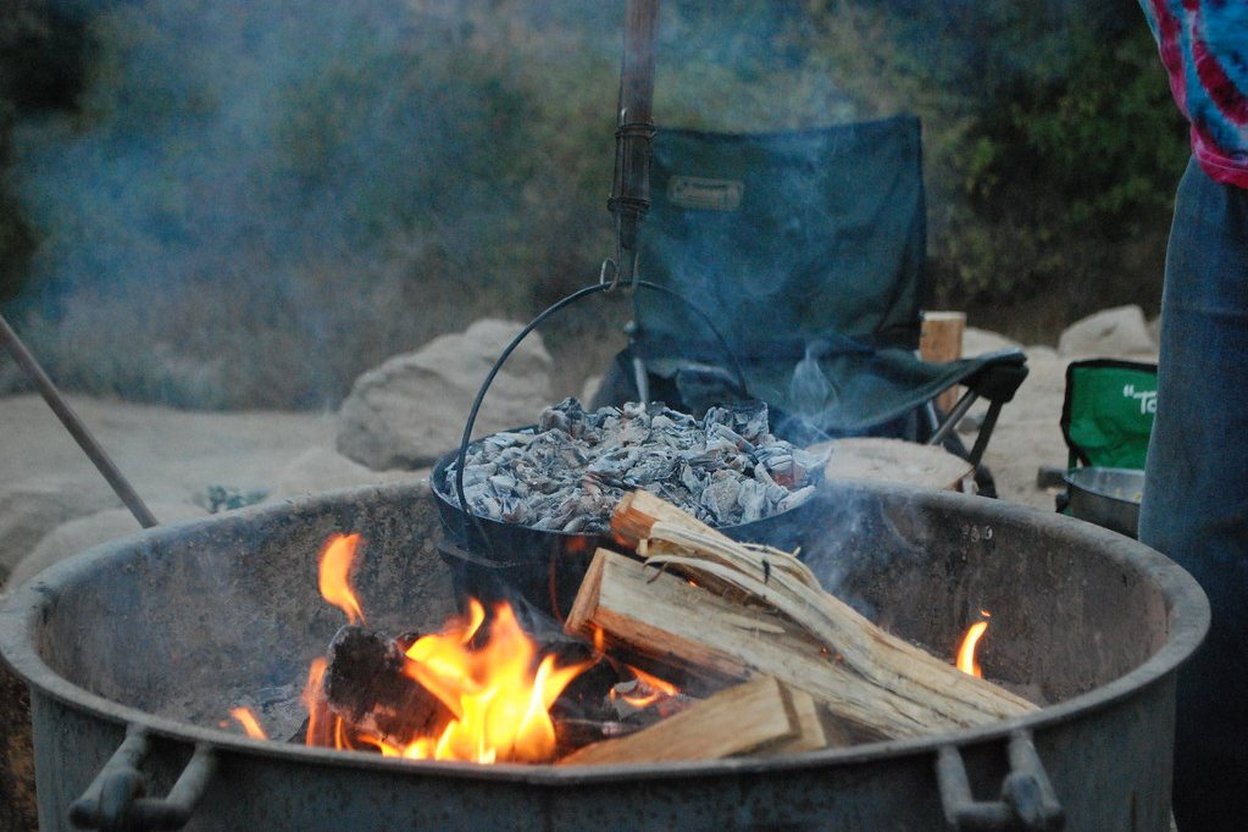
Yes, you can bake pumpkin pie in a Dutch oven at camp. Get the easy crunch recipe, coal counts, and food-safety tips.
It's a cold fall evening. The chili is gone, the kids are asking what's for dessert, and there's a can of pumpkin in the food bin that came along "just in case." Can you get a real pumpkin pie out of that cast iron pot sitting by the fire? Yes. You have two good options: a real pie with a crust, or an easier "pumpkin pie crunch" that camp cooks have been making on fall trips for years. Both work in a 12-inch Dutch oven over briquettes.
A real pie with a crust. There are two ways to do it. You can set a pie plate on a trivet inside the oven, so the oven works like a small baking box around it. Or you can skip the plate and press the crust right into a parchment-lined oven, then pour the filling on top. One camper on an RV forum baked a pumpkin pie in a 12-inch Dutch oven this way, with a glass pie pan sitting on a Lodge trivet, and said it worked. The catch is that no published recipe gives a tested bake time for this method, so you'll be going by the thermometer.
Pumpkin pie crunch. This is pumpkin custard poured straight into the oven, with dry cake mix, pecans and melted butter on top. It has no pastry and no pie plate. KOA publishes a version, and Scouting magazine ran one from a Raleigh, N.C. troop leader who calls it "a favorite, especially for the late fall campouts." It comes with tested amounts, coal counts and times.
Which one to pick: If this is your first Dutch oven dessert, or you're feeding a crowd, make the crunch. If you've baked in a Dutch oven before and the crust matters to you (say, a Thanksgiving camp trip on November 26), try the real pie and bring a thermometer.
Start with MDC's rule of thumb: double the oven's diameter in inches to get the number of briquettes for about 325°F. For a 12-inch oven, that's 24 briquettes, with 16 on the lid and 8 underneath. That two-thirds on top, one-third below split shows up in nearly every Dutch oven guide. Too much heat underneath scorches the bottom before the top is set.
For 350°F, the sources disagree a little:
Most of these land around 24 or 25 briquettes. Start there and adjust: MDC says adding or removing two briquettes changes the temperature by about 25°F. Wind, cold air and the briquette brand all make a difference, which is why your thermometer is more reliable than any chart.
Put the bottom coals in a ring under the outer edge of the oven, not bunched in the center. Spread the lid coals around the rim. Every 15 minutes, give the oven a quarter turn one way and the lid a quarter turn the other way to avoid hot spots. Try not to peek between turns, since every time you lift the lid you lose heat.
Briquettes burn for roughly 30 minutes, so at about the half-hour mark, light fresh ones in a chimney and swap them in. Tops usually brown faster than bottoms. MDC suggests lifting the oven off the bottom coals after about two-thirds of the bake time and letting it finish on the heat that's left.
KOA's version (12-inch oven, lined with foil):
Mix the filling and pour it into the lined oven. Sprinkle one box of dry yellow cake mix evenly over the top, then 1 cup chopped pecans, then drizzle 1 cup melted butter over everything. Bake at 350°F, with 6 briquettes in a ring underneath and 18 around the lid, for 50 to 55 minutes or until golden.
KOA's doneness test is simple. Push a drinking straw about an inch into the cake and pull it out. If the plug comes out clean, it's done.
The Scouting magazine version is bigger and spicier:
The topping is a box of spice cake mix with 1 cup butter cut in, plus 1 cup chopped pecans. Line or grease the 12-inch oven and bake about an hour with 15 coals on the lid and 9 underneath.
Mix the dry spices and sugar at home and pack them in a zip bag. At camp, you only add the wet ingredients.
Pie plate on a trivet. Set your filled pie in its plate on the trivet inside the preheated oven. The forum camper who used a glass pan in a 12-inch oven used about 26 coals, 9 below and the rest on top. They started hotter than 350°F and then pulled coals to bring the heat down. Another camper in the same thread, baking a fruit pie in a smaller oven, said a hot start is what gets you a flaky crust.
Crust pressed into the oven. Montana Homesteader's crust is quick to make: 1½ cups flour, 1 Tbsp sugar, ½ cup melted butter, ¼ cup milk and a dash of salt. Roll it out, press it into a parchment-lined 10- or 12-inch oven, and pour the pumpkin filling in. The KOA filling above fits well.
How long? No source gives a tested bake time for either version, so don't trust any number you see quoted, including this one. Start checking after about 40 minutes (that's an estimate). Use the thermometer to decide. America's Test Kitchen says to take pumpkin pie off the heat when the filling reads 175°F. At that point the center should still wobble slightly when you nudge the oven, like set gelatin, and not slosh like liquid. It firms up as it cools. If the edges are cracking and the center no longer jiggles at all, it's overdone, but still good to eat.
Lift the oven off the coals and let it cool with the lid off. If you lined the oven, wait a few minutes before lifting the dessert out by the foil or parchment edges. Have two people do it, and use a tray underneath.
This is the part people skip at camp. Pumpkin pie is an egg-and-milk custard. Iowa State Extension (passing along USDA advice) and LSU AgCenter both say egg-rich pies like pumpkin should be refrigerated if they won't be eaten within two hours of baking. Bacteria grow fast between 40°F and 140°F, and a picnic table on a mild fall afternoon sits right in that range.
So serve it warm the night you bake it. Wrap the leftovers once they've cooled and put them in the cooler. Keep them on top of the ice, not sitting in meltwater, and keep the cooler below 40°F. In the fridge, pumpkin pie keeps 3 to 4 days, but a cooler that gets opened a lot won't hold temperature as well as a fridge. In practice, finish it by breakfast.
Photo: Dutch Oven & Campfire by freeloosedirt, BY-SA 2.0.
Learn which camp methods can roast a real turkey: a flattened bird in a Dutch oven, a breast in a camp oven, and the food-safety temps to hit.
Spending Thanksgiving at a campsite or in the RV is a growing tradition. How to find an open campground, plan a holiday meal on a camp stove or Dutch oven, keep food…
Warm, simple campfire food for crisp fall nights: foil packets, skillet breakfasts, chili, apples and more, with almost no dishes.