
Camp Cooking
Can You Bake a Pumpkin Pie in a Dutch Oven at the Campsite
Yes, you can bake pumpkin pie in a Dutch oven at camp. Get the easy crunch recipe, coal counts, and food-safety tips.
Learn which camp methods can roast a real turkey: a flattened bird in a Dutch oven, a breast in a camp oven, and the food-safety temps to hit.
If you've ever flipped pancakes on a green two-burner stove, you've probably wondered whether it could handle a holiday bird. Yes, you can cook a real turkey at camp, as long as you match the bird to the right method: a smaller turkey flattened into a Dutch oven, a breast in a camp oven, or a carefully run fryer.
You'll learn what your stove can handle, which methods work, and the food-safety temperatures that keep cold-weather Thanksgiving dinner safe to eat.
A whole 15-pound bird roasted on a standard two-burner stove won't work the way it does in your kitchen at home. A two-burner stove is built to heat pans and pots from below. Roasting needs steady heat surrounding the bird, and an open burner gives you a flame under a pan.
Three approaches do work at a campsite:
Every method shares the same finish line. The turkey has to reach 165°F in three spots: the thickest part of the breast, the innermost thigh, and the innermost wing. Check each one with a thermometer before you take the bird off the heat.
Pick your method based on the bird size you want and the gear already in your car. A family of six does fine with a 10-lb spatchcocked turkey or two breasts. Plan for a larger crowd by cooking a second breast instead of hunting for a bigger bird.
A typical two-burner camp stove is a strong pan cooker and a poor roaster. The Coleman Classic two-burner puts out 20,000 BTU total and fits one 12-inch and one 10-inch pan side by side. A 1-lb propane cylinder lasts about an hour with both burners on high.
Low heat is the weak spot. Owners of the Classic stove say it's hard to hold a low simmer, which is exactly what a long turkey cook needs.
A propane camp oven covers that gap. The Camp Chef camp oven has a 3,000 BTU oven, tops out at 400°F, and offers 9 inches of interior height. It fits a 9x13 pan, which suits a turkey breast or parts.
Both run outdoors only because of carbon monoxide. Keep them out of tents, vans, and screen rooms.
The fuel math decides your plan. A 3-hour cook can't run on a 1-lb cylinder that lasts an hour on high. Pack an adapter hose and a 5-lb or 20-lb tank.
Charcoal in a Dutch oven, a spatchcocked bird, and a breast in a camp oven all fit what camp gear can deliver. Each uses specific numbers you can follow.
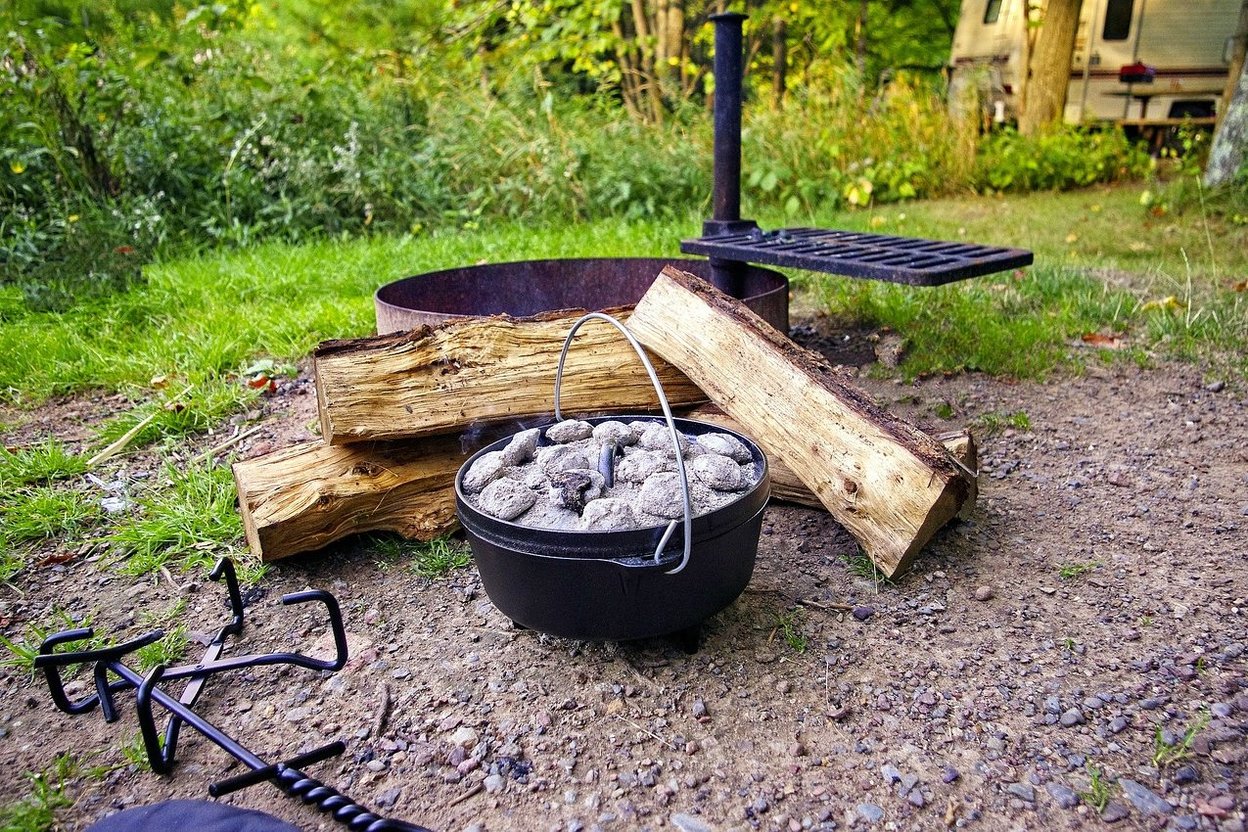
Dutch oven with charcoal. One tested Dutch oven roast turkey recipe uses a 10-lb turkey, butterflied to fit a 12-inch oven.
Lodge's coal guidance recommends equal coals top and bottom for roasting and a quarter-turn of the oven and lid every 10 to 15 minutes to prevent hot spots. Above 3,000 feet, add about 25°F of heat (a few extra coals).
Spatchcocking. Cutting out the backbone and pressing the bird flat lets it fit a shallow pot and cook evenly. Butterball's spatchcock method roasts a flattened bird at 400°F for about 1 hour 20 minutes, a target your coal setup or camp oven can aim for. Do the cutting at home with poultry shears and transport the bird flat in a sealed bag.
Turkey breast in a camp oven. A breast is the simplest option for a propane oven. USDA times on the FoodSafety.gov meat and poultry charts put a 4 to 6 lb breast at 1½ to 2¼ hours at 325°F. With 9 inches of height and room for a 9x13 pan, a breast fits comfortably.
Frying is the riskiest option on this list, and safety groups say so plainly. The USDA tip sheet on turkey frying says to fry outdoors only, using a bird of 12 lb or less that is fully thawed and unstuffed. Heat the oil to 350°F and cook 3 to 5 minutes per pound.
The NFPA calls oil-filled turkey fryers unsafe, and UL doesn't certify them. The National Park Service lists the usual failures:
Measure your oil line at home with water first: lower the turkey into the empty pot, fill with water to cover, remove the bird, and mark the level. Never leave the fryer alone, and keep kids and dogs well back.
Your turkey is safe to eat once it reaches 165°F in the thickest part of the breast, the innermost thigh, and the innermost wing. Take all three readings, since the wing and thigh lag behind the breast in a Dutch oven.
Thawing. In a refrigerator, allow about 24 hours for every 4 to 5 lb. A 10-lb bird needs roughly two to two and a half days, so start at home before you pack.
A cold-water bath in a cooler works when the fridge isn't an option:
A 12 to 16 lb bird takes 6 to 8 hours this way, which eats most of a camp day. Plan your cooler space and water access before you commit.
Holding time. Don't leave cooked or raw turkey out for more than 2 hours. Cool campground air helps, but the clock still runs, so pack leftovers into an iced cooler promptly.
Resting and carving. Let the bird rest 20 minutes before carving. Tent it with heavy foil so it holds heat in the wind.
Stuffing. Cook stuffing in a separate pan. It reaches a safe temperature on its own schedule, and a flattened bird has no cavity to fill anyway.
Most camp turkey problems trace back to a missing piece of gear, so pack these before you leave:
Do the prep at home. Mix herb butter, spatchcock the bird, and cook or pre-assemble sides so your stove time goes to the turkey and quick reheats.
Photo by MikeGoad on Pixabay.
Yes, you can bake pumpkin pie in a Dutch oven at camp. Get the easy crunch recipe, coal counts, and food-safety tips.
Spending Thanksgiving at a campsite or in the RV is a growing tradition. How to find an open campground, plan a holiday meal on a camp stove or Dutch oven, keep food…
Warm, simple campfire food for crisp fall nights: foil packets, skillet breakfasts, chili, apples and more, with almost no dishes.