

Camping Gear
LED vs. Gas Lanterns at the Campsite: Which One Goes Where
Put an LED lantern in the tent and a propane lantern outside. Compare brightness, run time, carbon monoxide risk and cost to see why.
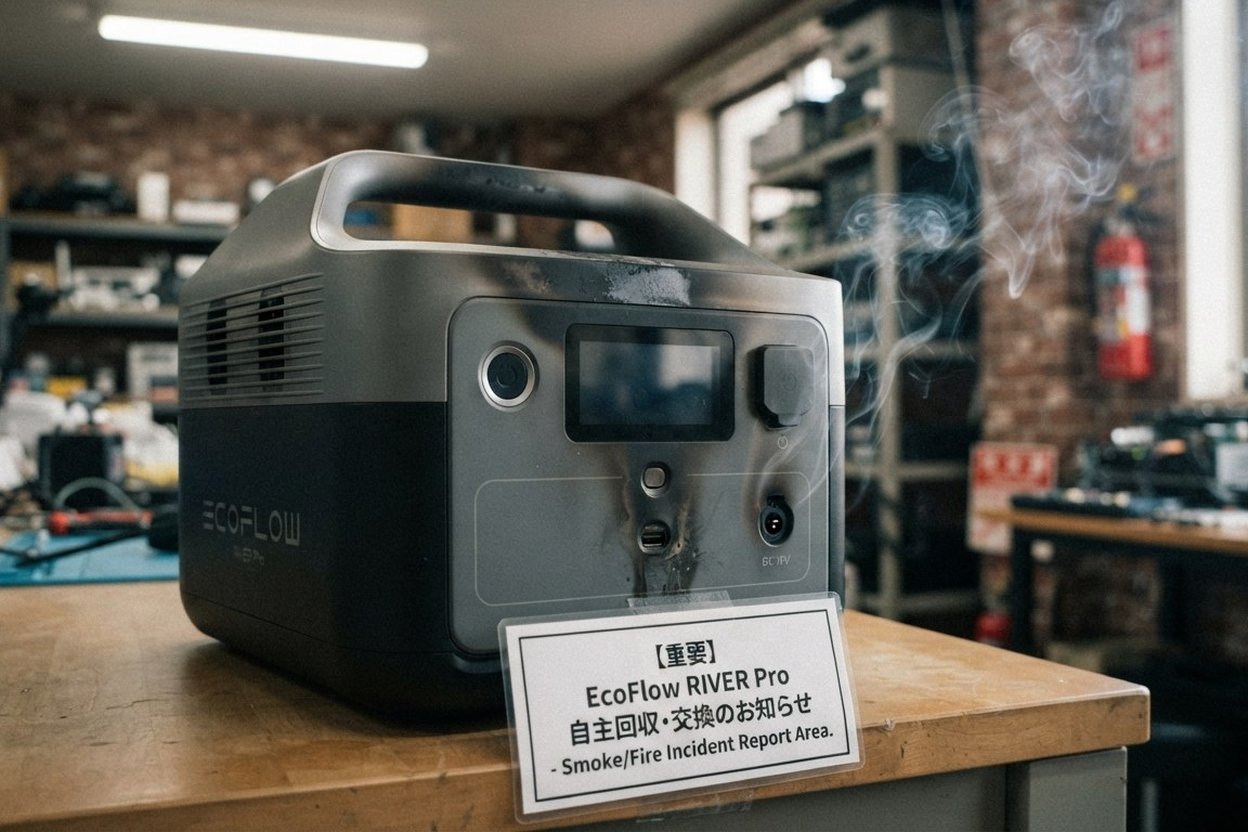
What the Japan RIVER Pro fire reports and recall cover, and what a US owner should check on the model label, charging, and storage.
If you own an older EcoFlow RIVER Pro, headlines about fires in Japan are reason to check your unit before your next trip. The Japan recall covers models made for that market, and as of October 8, 2026, there is no US recall or EcoFlow US notice for the US RIVER Pro.
Japan’s cases involved fires, including one with an explosion, so “smoke reports” understates what was reported. The details that matter for you are the model number on your unit, its condition, and how you charge and store it.
Yes, the Japan reports are real, and they led to an official recall; the published recall names Japan-market units, with no US RIVER Pro recall announced as of October 8, 2026. EcoFlow Technology Japan recalled 57,000 RIVER Pro power stations, model EFRIVER600PRO-JP, and 6,600 extra batteries, model EFRIVER600PRO-EB-JP, on February 5, 2026, after battery-cell overheating fires. Since September 24, 2026, the company has been paying owners in Japan to return units.
Japan’s Consumer Affairs Agency reported fires, including one involving an explosion. That is more serious than the “smoke reports” wording suggests. The reported cases are not proof that every RIVER Pro, or every unit sold in the United States, has the same defect.
As of October 8, 2026, there is no CPSC recall or EcoFlow US notice covering the US RIVER Pro. EcoFlow Japan says its remedy applies only to Japan-market units. A separate CPSC recall of EcoFlow DELTA Max 2000 units is unrelated to the RIVER Pro; its recall notice names that different product.
For a US owner, this is a reason to check the unit and your charging habits, not an instruction to stop using every RIVER Pro immediately.
Japan’s recall began with a firmware remedy on February 5, 2026, and expanded to a paid return program on September 24. The reported hazard involved battery-cell overheating and fires.
EcoFlow Technology Japan named the RIVER Pro model EFRIVER600PRO-JP and its extra battery, model EFRIVER600PRO-EB-JP. The recall covered 57,000 main units and 6,600 extra batteries. Japan’s published model identification uses the model number on the underside of the unit; no RIVER Pro serial-number or batch ranges were published.
The Consumer Affairs Agency listed four serious RIVER Pro accident reports. They included fires, with one case involving an explosion. The agency said the causes remained under investigation, so the reports do not establish that every case resulted from the same defect.
EcoFlow first asked Japan-market owners to update the product firmware through the app. On September 24, the company began offering gift cards to owners who returned eligible units. The collection program applies to the Japan-market products named in the recall.
Keep this recall separate from other EcoFlow notices. Japan also issued a recall for the original DELTA model, while the US CPSC notice linked above concerns the DELTA Max 2000. Neither product is the RIVER Pro.
For eligible Japan-market RIVER Pro units, EcoFlow’s remedy started with a firmware update and later added gift cards for returned products. The update runs through the EcoFlow app over Wi-Fi.
The firmware limits the maximum charge level, with the cap dropping as low as 90% depending on the battery’s age. It also lowers the top charging current and uses gentler charging near full capacity. Those changes reduce the battery’s charging stress.
From September 24, 2026, EcoFlow Japan began paying owners in Japan to send back eligible units through its collection program. EcoFlow’s Japan pages describe gift cards as the return payment.
These steps apply to the Japan-market models named in the recall. EcoFlow Japan’s FAQ says its firmware update is for Japan-market RIVER Pro units only, so you should not assume that the same app update or return offer applies to a US model.
The published recall names Japan-market model numbers ending in “-JP,” and EcoFlow Japan says its firmware remedy is for Japan-market RIVER Pro units only. No US RIVER Pro recall or EcoFlow US notice had been announced as of October 8, 2026.
Check the label on the bottom of your unit. The recalled main power station is model EFRIVER600PRO-JP; the recalled extra battery is EFRIVER600PRO-EB-JP. A US-market label without those Japan suffixes does not match the model numbers listed in the Japan recall.
The available recall information does not establish whether US and Japan units share battery cells, suppliers, or production batches. It also does not establish that a US RIVER Pro receives Japan’s charge-cap firmware through the EcoFlow app. Treat the Japan remedy as specific to the listed Japan-market products unless EcoFlow confirms otherwise for your unit.
If you own a Japan-market unit in the United States, contact EcoFlow for guidance on how to proceed. Japan’s phone number and support email are for Japan customers, so use EcoFlow’s US support channel for a US-based request.
Check the model label, inspect the unit, and confirm that your charging and storage setup follows battery-safety guidance. These steps help you decide what to do before your next trip.
If your model label ends in “-JP,” or you cannot read it, ask EcoFlow to identify the unit and explain whether the Japan program applies. If it is a US-market model with no damage or warning signs, the Japan recall alone does not tell you to stop using it.
Follow the EcoFlow manual and basic lithium-ion battery precautions whenever you charge or store your RIVER Pro. Keep the unit in a dry, ventilated place, away from heat and anything that can catch fire.
Use the charger specified for the unit, and check the power station and cable before plugging in. Stop charging if the unit becomes unusually hot, gives off an odor, or shows damage. Do not leave a questionable battery operating in a tent or vehicle where you cannot respond quickly.
The National Fire Protection Association’s lithium-ion battery tips and the U.S. Fire Administration’s battery safety guidance provide general precautions. You can also review the New York State lithium-ion battery consumer safety guide for practical handling advice.
Do not put a RIVER Pro or its extra battery in household trash or curbside recycling. Lithium-ion batteries require appropriate collection and handling.
Contact your local household hazardous waste program or recycling provider and ask whether it accepts portable power stations with built-in batteries. Follow its instructions for transport and drop-off, and keep a damaged unit away from combustible materials while you arrange disposal.
Put an LED lantern in the tent and a propane lantern outside. Compare brightness, run time, carbon monoxide risk and cost to see why.
Watt-hours set how long a power station runs and watts set what it can run. Here's how to size one for a camper before you buy.
Lithium power stations shouldn't charge below 32°F. Learn why, what Jackery, EcoFlow, Anker and Bluetti specify, and how to keep yours warm enough.