
Camping Gear
A power station gift for a camper: the two numbers to check
Watt-hours set how long a power station runs and watts set what it can run. Here's how to size one for a camper before you buy.
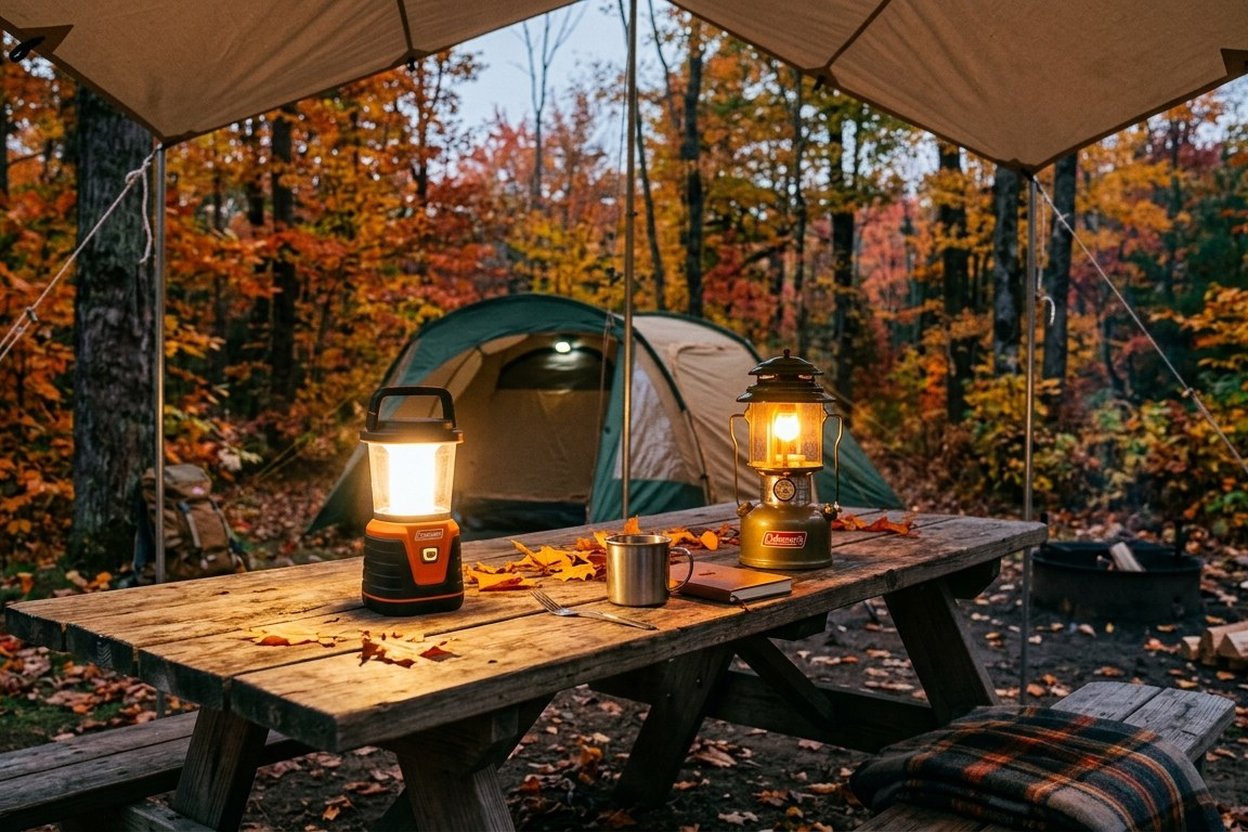
Put an LED lantern in the tent and a propane lantern outside. Compare brightness, run time, carbon monoxide risk and cost to see why.
The sun is down, dinner is still half-cooked, and somebody is holding a phone flashlight over the pot. A few minutes later a kid in the tent asks for a light so they can find their sleeping bag. Those two jobs need different lanterns. The best setup for most car campers is one of each. Use a rechargeable LED lantern inside the tent and at the picnic table. Use a propane lantern for the camp kitchen and the evening glow, and keep it outdoors. Here's why, with the numbers.
Bring both, and give each one its own job.
The LED lantern lives in the tent, hangs from the screen room, and sits on the picnic table during card games. It runs cool, it can't put carbon monoxide into a closed space, it doesn't care if a kid knocks it over, and you recharge it from the same power bank that keeps the phones alive. UCO's lantern buyer's guide calls LED lanterns lightweight and safer around kids and pets.
The propane lantern hangs over the camp stove and the cooler, or on a pole at the edge of the site. It's bright enough to light the whole area. UCO says fuel lanterns can light "an entire camp area." It also gives a warm, hissing glow that a lot of campers think of as part of camping.
The trade-off is simple. Gas is brighter. LED is safer, cheaper to run and easier to deal with. Some reviewers would skip gas entirely. Outdoor Life's lantern tester called propane lanterns "not a good choice for camping" and recommended rechargeable LED. That's one reviewer's opinion, and plenty of campers still keep a propane lantern around for the kitchen. Fall makes the choice matter more. Nights start earlier and run longer, so whatever you bring has to last from dinner until bedtime.
Propane lanterns put out a lot of light. These are manufacturer figures from retailer listings for Coleman's common models, all on one 16.4-oz propane cylinder:
One small cylinder gets you about one long fall evening on high, or two shorter ones turned down.
LED lanterns vary much more. In Outdoor Life's tests they ranged from 75 to 1,250 lumens:
Both types follow the same rule: brighter means shorter run time. UCO says this directly about LEDs, and the Coleman propane figures show it too. The Black Diamond Apollo shows the size of the gap. It's rated for 6 hours on high and 30 on low on its built-in battery, and 18 hours on high and 120 on low on three AAs. (It's being phased out at some retailers, but those numbers are typical of what the low setting can do.) Most nights in a tent don't need max brightness. Run the LED on low and it can last the whole weekend.
This is where the two types really differ.
Carbon monoxide. The U.S. Consumer Product Safety Commission says to never use fuel-burning heaters or lanterns while sleeping in enclosed areas such as tents, campers and other vehicles. CPSC also says the risk is higher at high altitude, which matters if your fall trip goes up into the mountains for the leaves. A CDC report found that fuel-burning camp stoves and lanterns were involved in 10 to 17 carbon monoxide deaths a year in the early 1990s. That data is old, but the chemistry hasn't changed. The same report says opening tent flaps, doors or windows "is insufficient to prevent build-up" of CO. So cracking the door doesn't make it OK to bring a propane lantern inside on a cold night. It belongs outside, every time.
Heat. UCO notes that fuel lanterns get hot to the touch and need ventilation. The glass globe on a lit propane lantern can burn a hand that reaches for it, and kids and dogs both reach for things. An LED lantern stays cool enough to hand to a five-year-old.
Glass and mantles. A propane lantern makes its light by burning a fabric mantle that turns into a fragile ash shell. Bump it and it can crumble. In Outdoor Life's testing, the only mantle on a Coleman NorthStar developed holes seconds after it was lit, and testing on that unit stopped there. That's just one lantern, but it shows that a propane lantern packed without a spare mantle may not work when you need it.
Outdoor Life estimates propane at roughly $40 for a week-long trip. Recharging LEDs from a power bank comes to about $40 too, but you pay it once for the power bank, which then charges your lanterns trip after trip. LED lanterns that take disposable batteries cost a little each time. D cells for the Coast EAL22 run about $10 a set.
Cold weather matters for battery lanterns. UCO says alkaline batteries lose about half their capacity below freezing. If your late-October or Thanksgiving-weekend nights drop into the 20s, a lantern that ran all weekend in July may fade by the second night. UCO's advice for trips longer than about two nights is to bring a longer-running lantern or a way to recharge it. On cold nights, keep spare batteries or the power bank in your sleeping bag.
Weight and bulk favor LED as well. UCO calls fuel lanterns "heavier, bulkier, less durable" than electric ones, and you also have to carry the fuel cylinders. For comparison, the Black Diamond Apollo weighs 12.1 oz with batteries. A propane lantern also needs a protective case or a careful spot in the bin, plus spare mantles.
Ask in camping forums and the propane lantern has loyal fans. In an Overland Bound thread on gas versus battery lanterns, campers talk about the warm glow and the steady, comforting hiss, which a lot of people associate with camping.
The same campers have a practical tip about bugs. Several say an amber or warm LED setting draws fewer bugs than bright white light. It's campers' experience, not a lab result, but it's worth trying if your lantern has an amber mode and the moths are crowding the picnic table.
Many of those posters end up with the same setup this article recommends: LED in the tent, propane outside for the atmosphere.
Pick based on how you camp:
Whichever you choose, the rule stays the same: anything that burns fuel stays outside the tent.
Watt-hours set how long a power station runs and watts set what it can run. Here's how to size one for a camper before you buy.
Lithium power stations shouldn't charge below 32°F. Learn why, what Jackery, EcoFlow, Anker and Bluetti specify, and how to keep yours warm enough.
Compare the Jackery 1000 v2, EcoFlow DELTA 3 Plus and Bluetti Elite 100 V2 for a weekend trip: weight, recharge, solar, prices and real run times.