
Camping Tips
How to Start a Campfire When Everything Is Wet
Wet wood? Find the dry inside, make feather sticks and kindling, and build the fire off the ground. Includes how to put it out fully.
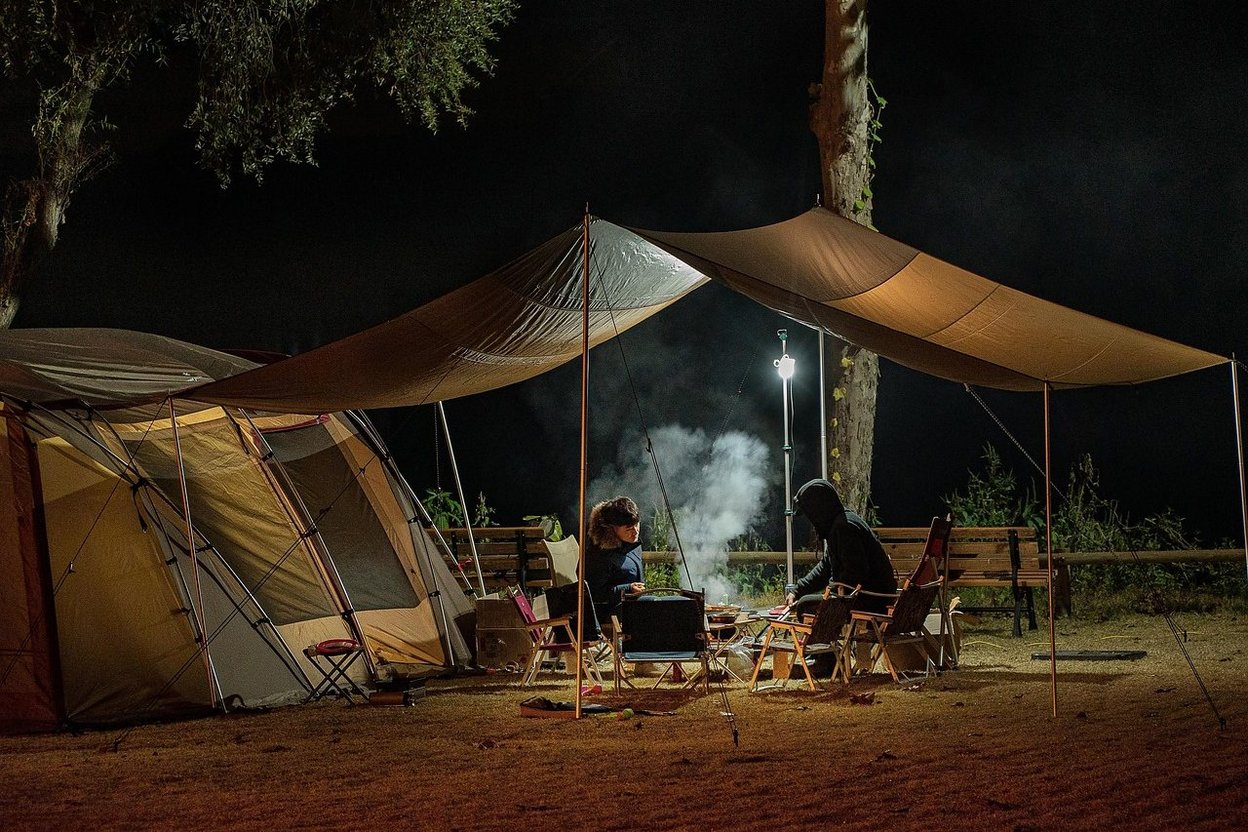
Dark comes before 5 PM on late-fall trips. Here's how to plan lights, fire, dinner, stargazing, and battery care for the long evening.
You know the moment. It's mid-afternoon, the light goes gold, and by the time you're back from the trail the trees are just shapes and the cooler is somewhere behind you in the dark. Bedtime is still five hours away. On a late-fall or winter trip, the answer is to treat the evening like a second day. Give it a plan: get the chores done while it's light, put up the right lights, have a fire and a hot dinner ready, look at the stars, and keep your batteries warm so they last the night.
The early dark comes fast once the clocks change. Daylight saving time ends Sunday, November 1, 2026, at 2:00 a.m., when clocks go back to 1:00 a.m. That weekend, the lake trip that felt like summer starts to feel like winter.
By December, the sun sets early across much of the country. Around the solstice in 2023, sunset was about 4:15 p.m. in Green Bay, 4:23 in Chicago, 4:30 in Portland, 4:32 in New York City, 4:39 in Denver and 4:49 in Washington, DC. It was later in the South (about 5:35 in Austin) and much earlier in Alaska (about 3:07 in Juneau). So "dark by 5" holds roughly from November through January for most of the US, depending on how far north you are. Check NOAA's Solar Calculator for your campground's exact times.
Here's something that surprises people: the earliest sunset isn't on the shortest day. At about 40°N, the latitude of New York, Philadelphia and Denver, it comes around December 8, about two weeks before the solstice. Philadelphia's sunset is 4:35 p.m. on December 7 and 4:38 p.m. on December 21, even though the day is shorter by then.
That gives you roughly 5 PM to bedtime to fill. Split it into blocks: cook, fire, games or stars, warm-up, bed. Then move every chore you can into daylight. Fill the water jugs, stack the wood within reach, chop the onions and lay out the stove before 4 o'clock. It's much easier to find the can opener now than with a headlamp later.
Once it's dark, light decides whether camp feels like a living room or a parking lot at night. Most camps need three kinds:
Brightness costs you run time, and the drop is big. Fenix's rated numbers for its HM23 V2.0 headlamp show how it works: about 5.4 hours at 300 lumens, 11.5 hours at 50 lumens, 100 hours at 3 lumens, and 17 hours on steady red at 5 lumens. Those are the maker's figures for one model, not an independent test, but the pattern holds for most lights. On a 14-hour night, low settings are what get you to morning. Save high for the moment you actually need to see far.
Feel matters too. One long-distance hiker has written that he prefers a soft lantern because a headlamp's cold light makes a tent feel less welcoming. That's one camper's opinion, but anyone who has played cards by a warm lantern will probably agree.
With the lights set, the fire becomes the center of the evening. Petzl's winter-camping advice puts it plainly: a fire helps with both warmth and boredom on long nights.
Get your wood near the campground. The National Park Service says to buy firewood ideally 10 miles or less from where you'll burn it, and calls 50 miles generally too far, because moving wood spreads tree pests. Packaged firewood with a USDA APHIS or state heat-treatment seal is generally considered safe to move. Before you leave, check the park's website or recreation.gov for fire restrictions, burn bans, whether you're allowed to collect wood, and where to buy it. Some places stay dry well into fall, and a burn ban will change your whole evening plan.
Next comes the big hot dinner. A long night is the right time for food that takes a while: a pot of chili, stew, foil packets in the coals, or leftover-turkey quesadillas on Thanksgiving weekend. After that, keep hot drinks going: cocoa, cider, tea. A warm mug in your hands does a lot for morale at 7 PM.
Then play something. Campers who are used to long nights keep suggesting the same simple things: a deck of cards, a book read aloud one chapter per night, and the fire. They work for kids and adults. A spooky story fits the week of Halloween.
Know when to quiet down. Quiet hours of 10 p.m. to 6 a.m. are common. Assateague Island National Seashore uses them, and during those hours it bans generators and idling vehicles to charge batteries. Its generators also can't be louder than 60 decibels at 50 feet. California state parks also set 10 to 6, while Washington's Schafer State Park lists 10 p.m. to 6:30 a.m. Rules vary by park, so read your campground's rules before you arrive.
When the fire burns down, the long night pays off. Winter dark comes early enough that kids can see a full sky well before bedtime.
Give your eyes time. The Park Service says it takes 20 to 30 minutes for your eyes to adjust fully to very low light. That's why the red-light habit from earlier matters: red light doesn't affect your night vision, or anyone else's, nearly as much. One look at a white phone screen and you're starting over, so the NPS also suggests keeping phones off. For families, that makes a good no-screens stretch. Twenty minutes of waiting turns into a sky full of stars.
Pick your night with the moon in mind. The best stargazing is around a new moon, or on any night before the moon rises or after it sets. Check the forecast too, because clouds hide everything. Bring a pad or camp chair you can lean back in, plus the warmest layer you packed. Sitting still for half an hour in December is colder than you'd guess.
All those low-setting lights and phones depend on batteries, and cold is hard on lithium.
The big rule: don't charge a power station below 32°F. A guide that summarizes the manuals for Jackery, EcoFlow, BLUETTI and Anker SOLIX says all four put their charging floor there, and that charging colder can permanently damage the battery. Running a station off its battery covers a wider range. The same guide lists 14°F to 113°F for Jackery and EcoFlow, and −4°F to 104°F for BLUETTI and Anker. Specs also differ between models from the same brand, so check the manual for yours.
Cold also cuts how much power you get out. In one lab test of a LiFePO4 battery, output dropped about 15% at 14°F and 35% at −4°F, and came back once the battery warmed. Keep the power station in the tent or the car instead of on the cold ground. Keep spare headlamp batteries and your phone in an inside pocket or at the bottom of your sleeping bag overnight.
The last part of the plan starts in the morning. Iowa's DNR suggests winter campers stay active in daylight, with hiking, cross-country skiing or snowshoeing, so they're actually tired by evening. A long hike in the afternoon makes an 8 PM bedtime feel normal.
On winter nights, sleep is part of the plan, not giving up. Turn the lights down, put on dry socks, and get in the bag early. Ten hours of sleep is one more thing a long night makes room for.
Photo by chulmin1700 on Pixabay.
Wet wood? Find the dry inside, make feather sticks and kindling, and build the fire off the ground. Includes how to put it out fully.
How many firewood bundles a three-night camping trip needs, how to adjust for cold or wet nights and cooking, and why to buy wood near camp.
Get a wet tent and damp sleeping bag as dry as you can at camp, pack them safely, and finish drying at home before mildew sets in.