
RVs & Campers
How Much Propane Does a Camper Furnace Use on a Cold Night
Find how much propane a camper furnace burns on a cold night, how to work out your own number from the BTU label, and how much to bring.
Compare storing your camper at home, in a storage lot or at a campground this winter, with typical costs and the rules to check first.
The last trip of the season is done and the cooler's back in the garage. The camper is sitting in the driveway, and the first hard frost is in the forecast. You have three good places to keep it until spring: at home, in a commercial storage lot (open, covered or indoor), or at a campground that stores rigs. Your winter, your budget and what the rig is worth decide which one fits. Here's what each one costs and when it makes sense.
There are three real choices:
Here's how to pick. An open outdoor spot works for a lot of trailers, as long as the rig has a good cover and a fresh roof inspection. Indoor storage is worth the money if the rig is expensive or your winters are hard. In the snow belt, plan on roughly $300 to $900 for a six-month winter at a mid-range lot, before any towing. Treat all these numbers as ballpark figures. Guides disagree, and prices depend heavily on where you live.
Home is the cheapest choice and the easiest one to keep an eye on. You can start the generator now and then, check for leaks after a storm and spot mouse trouble early. Before you back it in for the season, check two sets of rules.
HOA covenants (CC&Rs). These can be stricter than city code, and they're enforceable in most states. California is the main exception: HOAs there generally can't regulate parking on public streets unless they have an agreement with the city.
City code. On residential streets, the most common limit is 72 hours, and you can't sleep in the rig. Some places are tighter. New York City allows 24 hours, many residential areas of Anchorage allow 24, Las Vegas allows 72 hours in a row, and most Kansas cities allow 48 to 72. Driveway rules vary too:
Winter parking bans. In snow country, the plow schedule decides where you can park. Many Maine towns ban overnight street parking all winter. In Ellsworth it's midnight to 6 a.m. from November 1 to April 1, and cars that block plowing get towed. In Vermont, Brattleboro bans overnight parking on all public streets from about November 15 to April 15, even when there's no snow, and violators can be towed at the owner's expense. A camper left on the street there in December won't stay put for long.
These rules change from town to town, so read your local ordinance before counting on any of them.
If home won't work, a storage lot is the usual answer. StorageCafe put the national average for all RV storage at about $184 a month in September 2026. A 10'x20' unit without climate control averaged about $192, and a 10'x30' unit about $256. Open outdoor spaces cost the least, covered spots cost a bit more, and climate-controlled indoor units cost the most.
Rig type matters too. One guide lists travel trailers at about $75 to $130 or more a month and pop-ups at about $75 to $130. Class A, B and C motorhomes start around $130. Rec Nation's estimate for travel trailers and fifth wheels is $50–$150 outdoors and $100–$250 for covered or indoor.
Location matters just as much. Rec Nation's broad averages:
Its season totals for 3 months are $300–$900 outdoors, $450–$1,200 covered and $600–$1,500 indoor. For 6 months, it's $600–$1,800 outdoors, $900–$2,400 covered and $1,200–$3,000 indoor.
Then come the extras, which Rec Nation estimates at:
Timing. Rates often go up in late fall, as everyone has the same idea around Halloween. Booking early helps, and some facilities give a discount if you prepay or rent long-term.
Measure before you reserve. Most RVs are 10 to 15 feet tall and 7 to 10 feet wide, but standard storage units have ceilings of about 8 feet. Measure the whole rig, including mirrors, ladders, the AC unit and anything else on the roof.
Some campgrounds and RV resorts store rigs on site over the winter. RJourney, for example, offers storage at parks including Baraboo RV Resort in Wisconsin and Cedar City RV Resort in Utah, with current rates by phone.
The big advantage is that the camper never has to move. You skip the tow and can winterize it right where it sits. The catch is that space is limited, and seasonal guests get first claim. If you have a seasonal site, ask about winter storage when you renew in the fall, not after the first snow.
A camper in a heated building still needs to be put away properly. One parked in an open field needs it even more. Start with the owner's manual. It overrides any general checklist, including this one, especially for tire pressure and battery care.
Whichever way you lean, get two or three local quotes this month. Ask each place about prepay or long-term discounts, extra fees and how often you can get to your rig. Booked before Thanksgiving, most lots still have open spots.
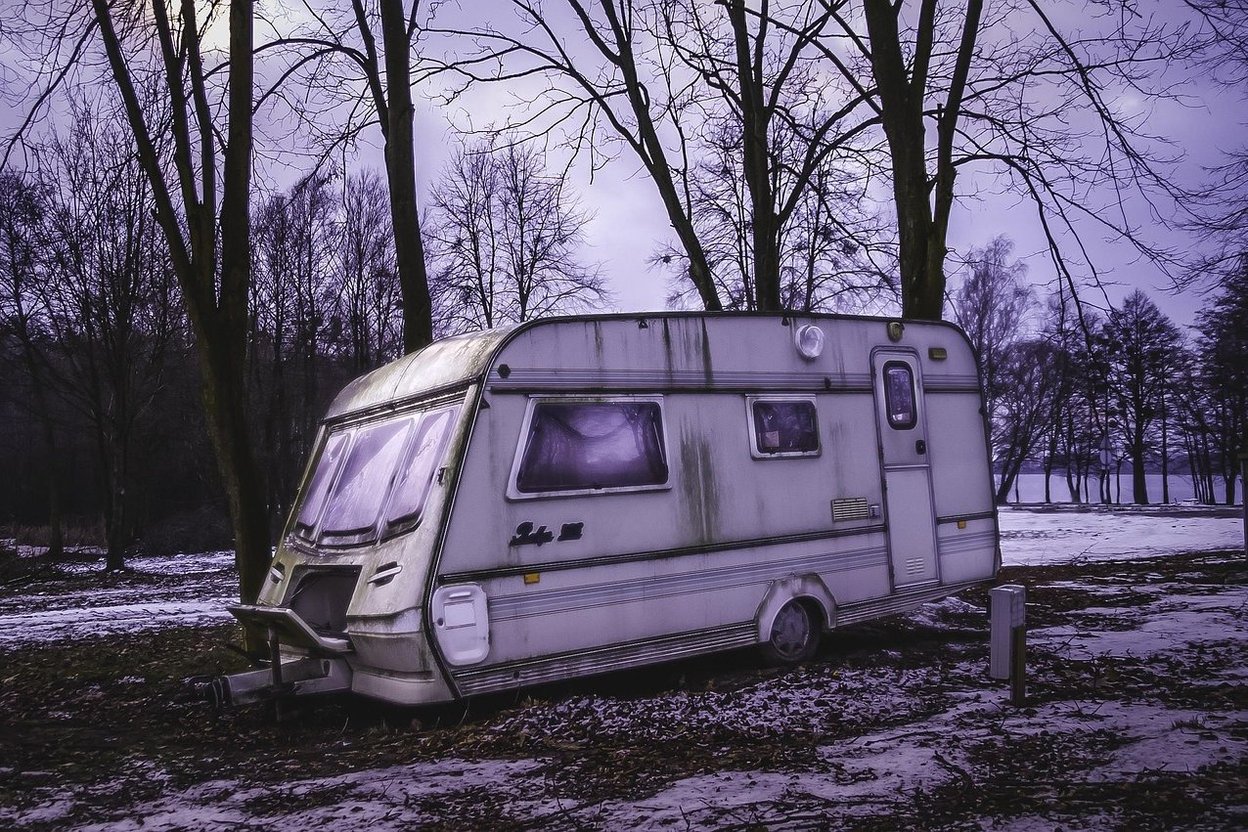
Photo by tookapic on Pixabay.
Find how much propane a camper furnace burns on a cold night, how to work out your own number from the BTU label, and how much to bring.
One hard freeze can crack an RV's water lines, pump and water heater. How to winterize a camper with RV antifreeze or compressed air, plus the battery, tires, seals and mice.
Tank heater pads keep fresh, grey and black tanks from freezing. How they work, how much battery power they use, and when cold-weather campers actually need them.