
Camping Tips
How to Start a Campfire When Everything Is Wet
Wet wood? Find the dry inside, make feather sticks and kindling, and build the fire off the ground. Includes how to put it out fully.
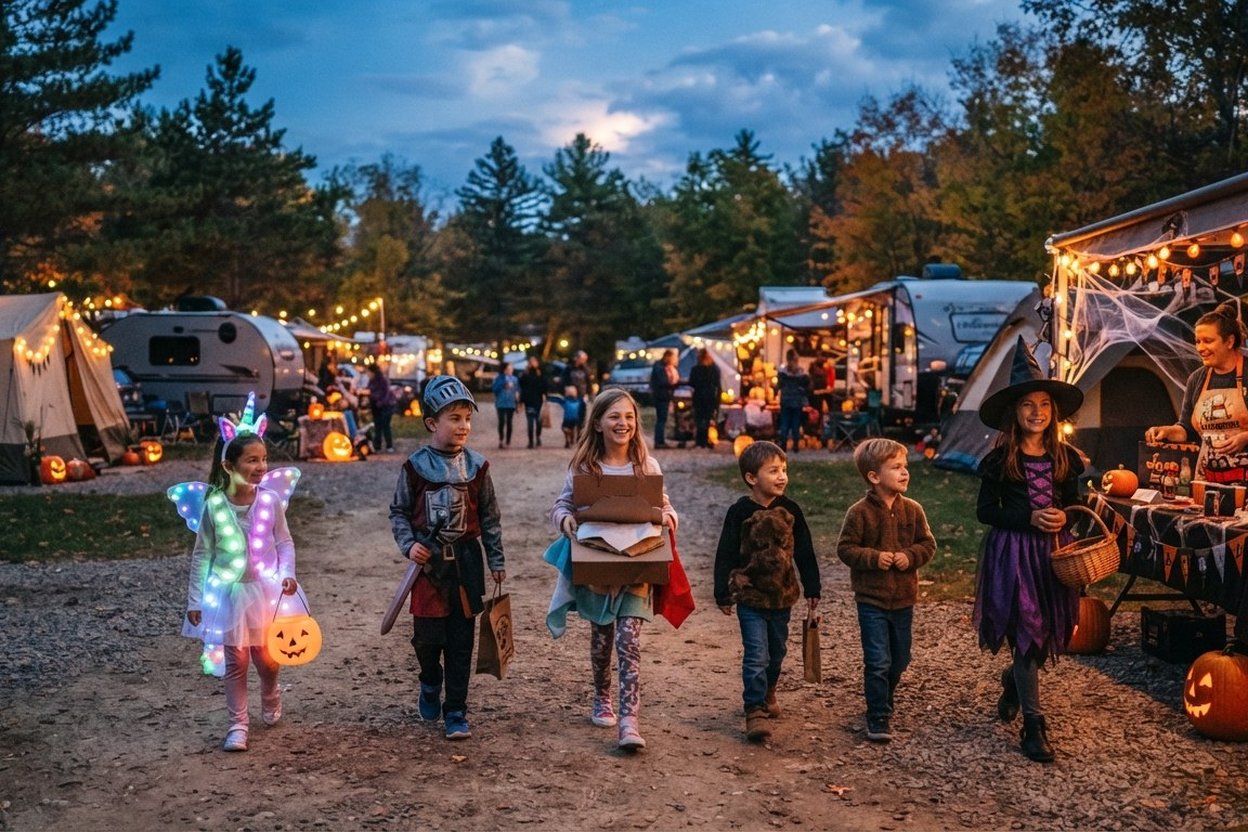
Add five Halloween bins to your usual camping list: costumes, battery lights, outdoor decorations, candy storage, and cold-night sleep gear.
When you’re packing for a Halloween weekend, the regular tent-and-sleeping-bag list needs a few seasonal additions. Add five bins to your usual gear: warm-layer costumes, battery-powered lights, outdoor-rated decorations, treats with a wildlife-safe storage plan, and cold-night sleep upgrades.
Late October brings costumes, candy, and chilly evenings into the campground. Pack for those details, then check your campground’s rules for decorations, power use, and quiet hours before you leave.
Add five Halloween-specific groups to your normal camping list: costumes that fit over warm clothes, battery lights, outdoor-rated decorations, treats with a storage plan, and extra sleep insulation.
Pack costumes with room for a fleece or jacket, and add reflective tape so kids stay visible after dark. Put battery lights and glow sticks in the lighting bin, with headlamps for walking around camp.
Choose decorations and cords marked for outdoor use. Ask your campground about display rules and power limits before setting up. For treats, bring candy plus non-food options, and decide where each will be stored when it is not being handed out.
Make a separate cold-night sleep bin with hats, mittens, dry layers, and a warmer bag or extra blankets. Keeping these add-ons together makes it easier to check the Halloween gear without unpacking your regular camping kit.
Build each costume around warm layers, safe visibility, and footwear suited to walking on campground paths.
Choose polyester or nylon costumes labeled flame resistant for time near a campfire. The label does not replace distance from the flames, so keep costume hems and loose accessories clear of the fire.
Pack makeup in place of masks so your child’s view stays unobstructed. Add reflective tape to outer layers, and give each child a flashlight for walking after dark. The American Academy of Pediatrics’ Halloween safety tips also recommend visibility measures and costumes that allow safe movement.
Closed-toe shoes suit haunted trails, where uneven ground and low light make sandals a poor choice. If your campground runs a pet costume contest, bring a costume for your pet and check that it fits comfortably before the event.
Keep costume accessories in one labeled bag. That way, you can find the makeup, tape, and flashlight without digging through the sleeping gear when it is time to get ready.
Use battery-powered lights for Halloween displays and walking around camp, keeping open flames out of decorations.
Battery tea lights work inside jack-o’-lanterns, and glow sticks provide a simple option for paths or costumes. Pack a headlamp for each person who needs hands-free light around the tent, restroom, or campsite.
For string lights, choose a product certified by a recognized testing laboratory and marked for outdoor use. Check the cord and bulbs before packing; leave any damaged set at home. The U.S. Consumer Product Safety Commission reports that pumpkin-carving injuries sent an average of 3,200 people a year to emergency departments during the three years before its 2022 release. The agency also warns that candles can start Halloween fires. Review the CPSC’s Halloween safety guidance before you carve or decorate.
Pack spare batteries with the lights, and test each item before leaving. A dark campsite is a poor place to discover that a headlamp or string-light set is out of power.
Choose lightweight, outdoor-marked decorations and use power only within your campground’s rules.
Use outdoor-rated cords sized for the electrical load. Plug them into a GFCI-protected outlet, and keep the setup within the outlet’s capacity. Ask the campground about decorating rules, power limits, and any restrictions before you bring a display.
Keep hay bales and corn stalks away from campfires, lanterns, and light bulbs. Turn decorations off at bedtime, and follow posted generator quiet hours. If you plan to burn wood, buy firewood near the campground where you will use it; Oregon State Parks offers park-specific camping information.
Choose decorations you can secure without damaging campground features. Pack them out when you leave, including ties and small pieces that can be left behind during cleanup.
Treat candy as food in bear country, and follow the campground’s rules for storing it.
Keep candy in a food locker or hard-sided vehicle when the park directs you to use those options. Yosemite’s bear-safety guidance explains how to store food and scented items; the Great Smoky Mountains’ frontcountry camping information lists rules for its campgrounds. Check the rules for your specific site before packing treats.
Carry candy wrappers out with your trash, and keep the storage plan clear to everyone in your group. Bring non-food treats for children who need an alternative, such as small toys or stickers.
If a child has a food allergy, pack their prescribed epinephrine and keep it accessible to the adult responsible for them. Store it according to its instructions, and make sure the caregiver knows where it is.
Pack extra insulation for a late-October night, and have dry sleep layers ready before temperatures drop.
Bring several thin layers so you can adjust as the evening cools. Add a warm hat and mittens for time outside, then change out of any damp costume before getting into your sleeping bag. Keep dry sleep clothes protected in a sealed bag.
A warmer sleeping bag or extra blankets help you stay comfortable when your usual setup feels too cool. Check the forecast for your campground and choose the sleep layers accordingly.
If your trip includes Saturday night before the November 1 time change, plan for an extra hour in the dark: daylight saving time ends at 2 a.m. Sunday, Nov. 1. Set out a headlamp before bed so you can find it without disturbing everyone else.
Use this quick list to check the Halloween gear alongside your regular camping kit:
Before you leave, confirm the campground’s decoration, generator, and food-storage rules.
Wet wood? Find the dry inside, make feather sticks and kindling, and build the fire off the ground. Includes how to put it out fully.
How many firewood bundles a three-night camping trip needs, how to adjust for cold or wet nights and cooking, and why to buy wood near camp.
Get a wet tent and damp sleeping bag as dry as you can at camp, pack them safely, and finish drying at home before mildew sets in.