
Camping Gear
LED vs. Gas Lanterns at the Campsite: Which One Goes Where
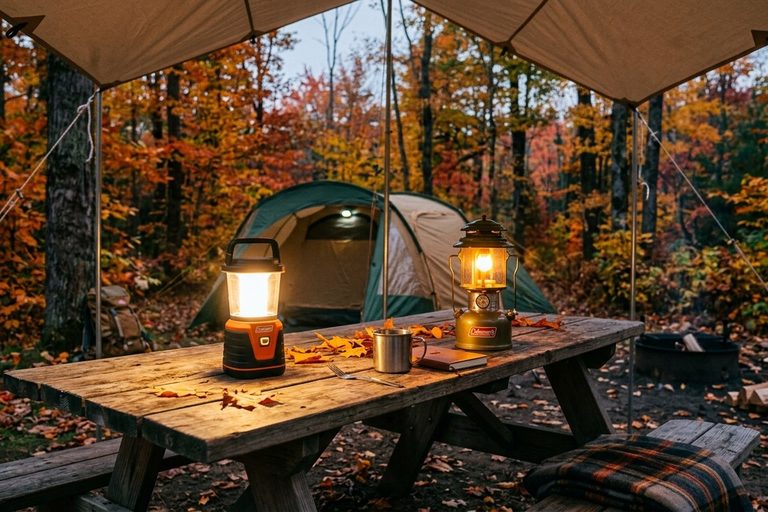
Put an LED lantern in the tent and a propane lantern outside. Compare brightness, run time, carbon monoxide risk and cost to see why.
The ground steals more heat than the air. What a sleeping pad's R-value means, the standard behind it, what number you need for each season, and how to stack pads.
Cold campers usually blame their sleeping bag. Most of the time, the real problem is underneath them. Your body crushes the insulation in your bag, and the cold ground pulls heat out all night. That's the sleeping pad's job, and its R-value tells you how well it does it.
R-value measures resistance to heat flow. The higher the number, the better the pad insulates you from the ground. It's the same idea as the R-value on house insulation.
Since 2020, most major pad makers test with the same lab standard (ASTM F3340), so R-values from different brands can finally be compared fairly. Older pads and some budget brands may still use their own methods, so treat those numbers with caution.
A rough guide many campers and brands use:
If you sleep cold, go higher. Ground temperature, not just air temperature, is what matters: frozen ground and snow pull heat fast.
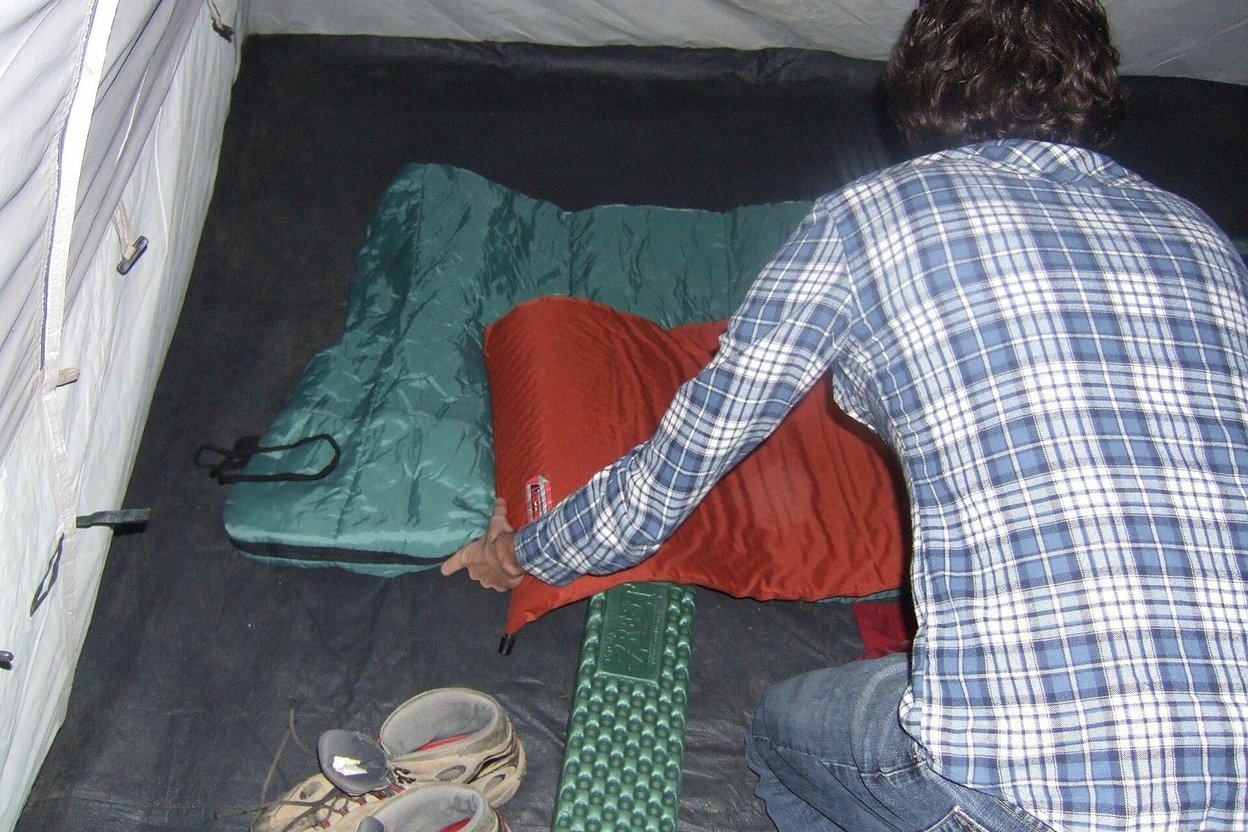
R-values add up when you stack pads. A closed-cell foam pad (often around R 2) under an inflatable pad (say R 3) gives you about R 5. The foam pad also protects the inflatable from punctures, and if the inflatable fails at 2 a.m., you still have something under you.
On nights in the 30s, aim for R 4 or higher, and pair it with the right bag. See staying warm when nights drop below 40.
The best sleeping bag in the world won't keep you warm on a thin pad. Fix what's under you first.
Photo: A person adjusting a sleeping bag inside a tent by Mike Burns, CC BY-SA 2.0.
Put an LED lantern in the tent and a propane lantern outside. Compare brightness, run time, carbon monoxide risk and cost to see why.
Watt-hours set how long a power station runs and watts set what it can run. Here's how to size one for a camper before you buy.
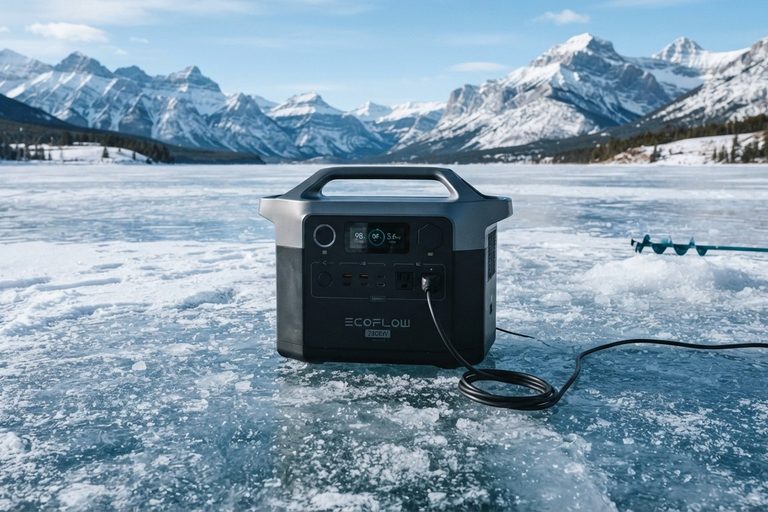
Lithium power stations shouldn't charge below 32°F. Learn why, what Jackery, EcoFlow, Anker and Bluetti specify, and how to keep yours warm enough.