
Camping Gear
LED vs. Gas Lanterns at the Campsite: Which One Goes Where
Put an LED lantern in the tent and a propane lantern outside. Compare brightness, run time, carbon monoxide risk and cost to see why.
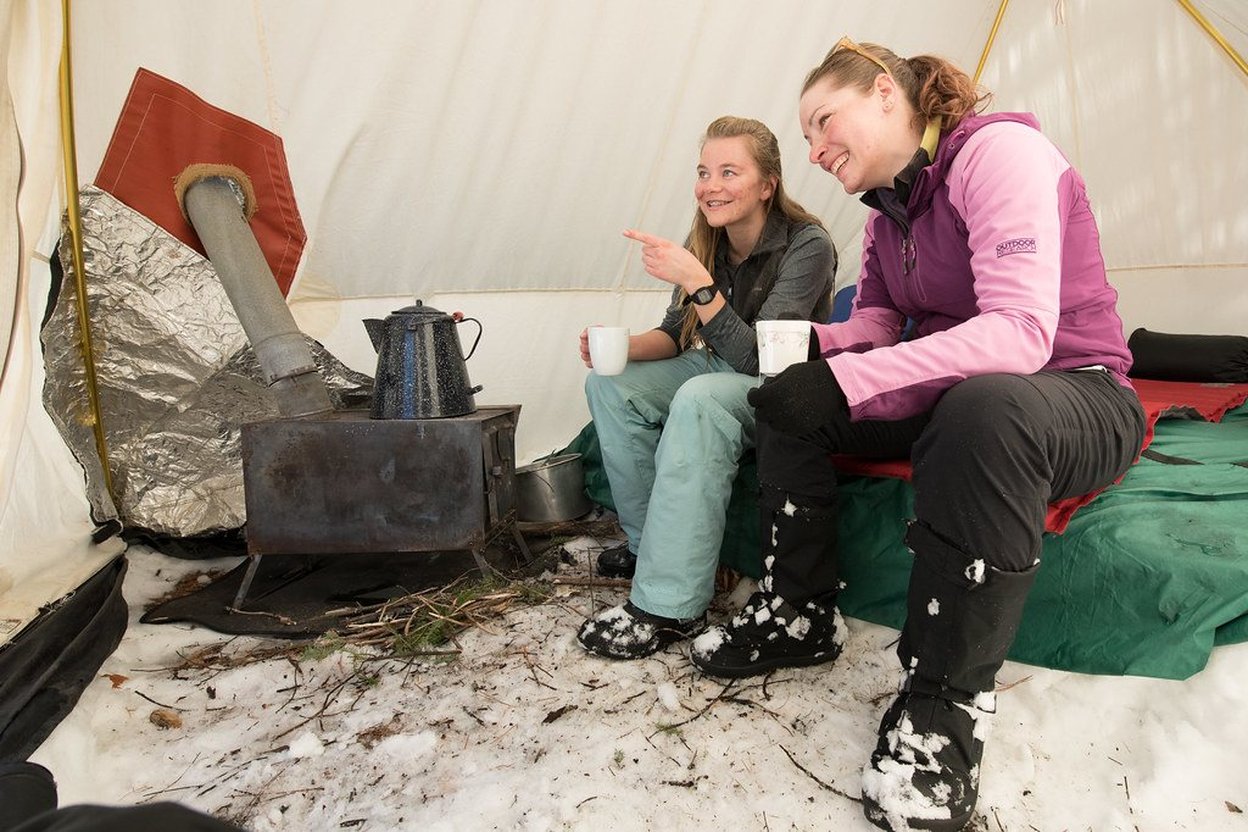
Discover if a wood stove tent is worth the investment for cold camping, with safety tips, pricing, and guidance on when to use one.
You know the part of a late-October trip when the sun drops behind the ridge around six, the temperature falls with it, and everyone is in their sleeping bag by seven because there's nowhere else to be warm. A hot tent fixes that. It's a tent with a wood stove inside, and it gives you a warm room to cook, play cards and dry wet socks in. Our verdict: it's worth the money if you camp in the cold and stay put for two or three nights or more. For a single night it's too much gear, too much setup and too much money.
What makes it a hot tent is the stove jack. That's a heat-rated panel sewn into the wall or roof so the chimney can pass through without the hot pipe touching the tent fabric. Seek Outside makes its jacks from silicone-coated fiberglass. Snowtrekker's replacement jack uses siliconized fiberglass with a 1,000-degree gasket. The pipe has to fit the hole: the Winnerwell Nomad Medium and Seek Outside's medium stove both use 2.5-inch pipe, while Snowtrekker's Basecamp jack is a 5-inch opening unless you order a smaller one.
A spark arrestor at the top of the chimney catches embers before they land on the roof. Snowtrekker requires one. Winnerwell includes one, and Seek Outside builds it into the damper. The stove itself needs space. Snowtrekker wants it at least 20 inches from every wall, and that rule is part of its warranty. Winnerwell says 18 inches from anything that can burn, or about half that with a non-combustible heat shield.
Then you choose a fabric. Canvas breathes, so you get less condensation dripping on you. It's heavy, it's water-resistant rather than waterproof, and it will still burn if flame or steady heat reaches it. Silicone-coated nylon is light and waterproof, but a stray spark can melt a pinhole in it. Seek Outside's fix for that is a dab of silicone.
These are prices on the makers' own sites as of early October 2026. Plan on buying the stove separately. Floors, stakes and pipe often cost extra too.
The real spread runs from roughly $200 for a tent alone to around $840 for a light tipi with a titanium stove to more than $2,400 for a premium canvas setup with its stove.
The old setup was a heavy canvas wall tent with a sheet-metal stove, hauled in by truck, pack horse or canoe. You can still buy that kind of camp. The White Duck bell, at 66 pounds or more, is car-camping gear through and through. Snowtrekker bills its Basecamp as lighter and faster than a traditional wall tent, with a 15- to 20-minute pitch once you've done it a few times, and says its recommended stove keeps things comfortable down to about −20°F to −25°F outside. The new end of the market is a nylon tipi and titanium stove that together weigh about 5 pounds before pipe.
How does wood compare with the other ways to heat a tent?
Propane: The Mr. Heater Portable Buddy costs $155.14, puts out 4,000 or 9,000 BTU, and has a low-oxygen sensor and tip-over shutoff. One 1-pound cylinder lasts about 3 hours on high or 6 hours on low. That's a cheap way to warm a tent while everyone's awake.
Battery: A power station gives you heat with no fumes, but only for a short while. Jackery's own estimate for its 1,070 Wh Explorer 1000 v2 is about 1.7 hours running a 500-watt heater and 36 minutes running a 1,500-watt heater. A 100-watt heated pad or blanket would run about 7.6 hours. A roughly 1 kWh station like EcoFlow's DELTA 2 falls in the same range. It's fine for taking the chill off before bed. It won't carry you through a winter night.
All three heat sources quit when the fuel does. The firebox goes cold in a few hours, the propane cylinder empties, the battery dies. At 3 a.m., your sleeping bag is what's keeping you warm. Seek Outside says it plainly: if the forecast is 0°F, bring a 0°F bag unless someone plans to stay up all night feeding the stove.
Carbon monoxide comes first. CO has no color and no smell. The U.S. Consumer Product Safety Commission says people die every year from portable heaters, lanterns and stoves used inside tents, campers and vehicles. It says not to run portable heaters or lanterns while anyone is sleeping, and it notes the danger is greater at high altitude. Early symptoms look a lot like the flu: headache, dizziness, nausea, sleepiness and confusion.
A wood stove sends its exhaust up the chimney, which is safer than an unvented heater. Even so, stove makers expect someone to be watching it. Snowtrekker and Winnerwell both say never leave the fire burning unattended. Our advice: hang a battery CO alarm in any heated tent, every trip. It isn't required by law, but it's the cheapest safety gear you'll carry.
Burn dry wood. Winnerwell warns that green or wet wood can produce carbon monoxide and creosote in the flue. If thick smoke is pouring out of the chimney, the stove isn't burning hot enough. Clean the flue about every 20 hours of burning, and open the stove door slowly so smoke doesn't roll into the tent.
Try it outside first. Both Snowtrekker and Winnerwell say to run a new stove in the open a few times before using it in the tent.
Stake it down and keep your distance. Stake or bolt the stove's legs so it can't tip, and keep the clearances listed above. Don't overload the firebox, because overheating can warp the steel.
Watch for burns. The stove body gets hot enough to burn skin. Use leather gloves. With kids or dogs in the tent, set up a stove guard or fence and keep an eye on them.
Shutting down for the night: Don't fill the stove and go to sleep with it roaring. Let it burn down while someone's still awake, and follow your stove's instructions for shutting it down. Ashes you dump outside get the campfire treatment. Lassen Volcanic National Park's rule is to drown them, stir and turn them, and keep adding water until everything is cool to the touch.
A stove going for three nights burns a lot of wood. You'll want to bring it from home. Usually you shouldn't. In an October 1, 2026 notice, USDA APHIS tells campers to buy firewood near where they'll burn it, to use certified heat-treated wood if any has to travel, and to burn the leftovers where they bought it. The pests it warns about include emerald ash borer, spongy moth and Asian longhorned beetle. The National Park Service says 10 miles or less from your campsite is the right distance and 50 miles is generally too far.
Some states make it law. Since 2014, Wisconsin has banned firewood from more than 10 miles away on state parks and DNR lands unless it's certified from a state-approved vendor. Staffed campgrounds there sell wood on site. There's no single national rule and other states have their own, so check the state and the park before you load the truck. Small, dry, split wood works best in a tent stove anyway.
Buy the sleep system before the stove. REI's chart pairs a 20°F night with a bag rated 15°F or lower and a pad of R-4 or better. For a 0°F night it suggests a 0°F bag and a pad of R-5.5 or higher. R-values add up, so putting a closed-cell foam pad under your inflatable is a cheap way to get there. Next, consider a Portable Buddy at about $155 for warmth while everyone's awake, turned off before anyone falls asleep, plus a battery CO alarm. Get through a frosty Thanksgiving weekend with that setup, and if you still want somewhere warm to sit at 7 p.m., that's when a hot tent is worth buying.
Photo: 20180228-FS-LSC-1046 by Forest Service Photography, Public Domain.
Put an LED lantern in the tent and a propane lantern outside. Compare brightness, run time, carbon monoxide risk and cost to see why.
Watt-hours set how long a power station runs and watts set what it can run. Here's how to size one for a camper before you buy.
Lithium power stations shouldn't charge below 32°F. Learn why, what Jackery, EcoFlow, Anker and Bluetti specify, and how to keep yours warm enough.