
Camping Tips
How to Start a Campfire When Everything Is Wet
Wet wood? Find the dry inside, make feather sticks and kindling, and build the fire off the ground. Includes how to put it out fully.
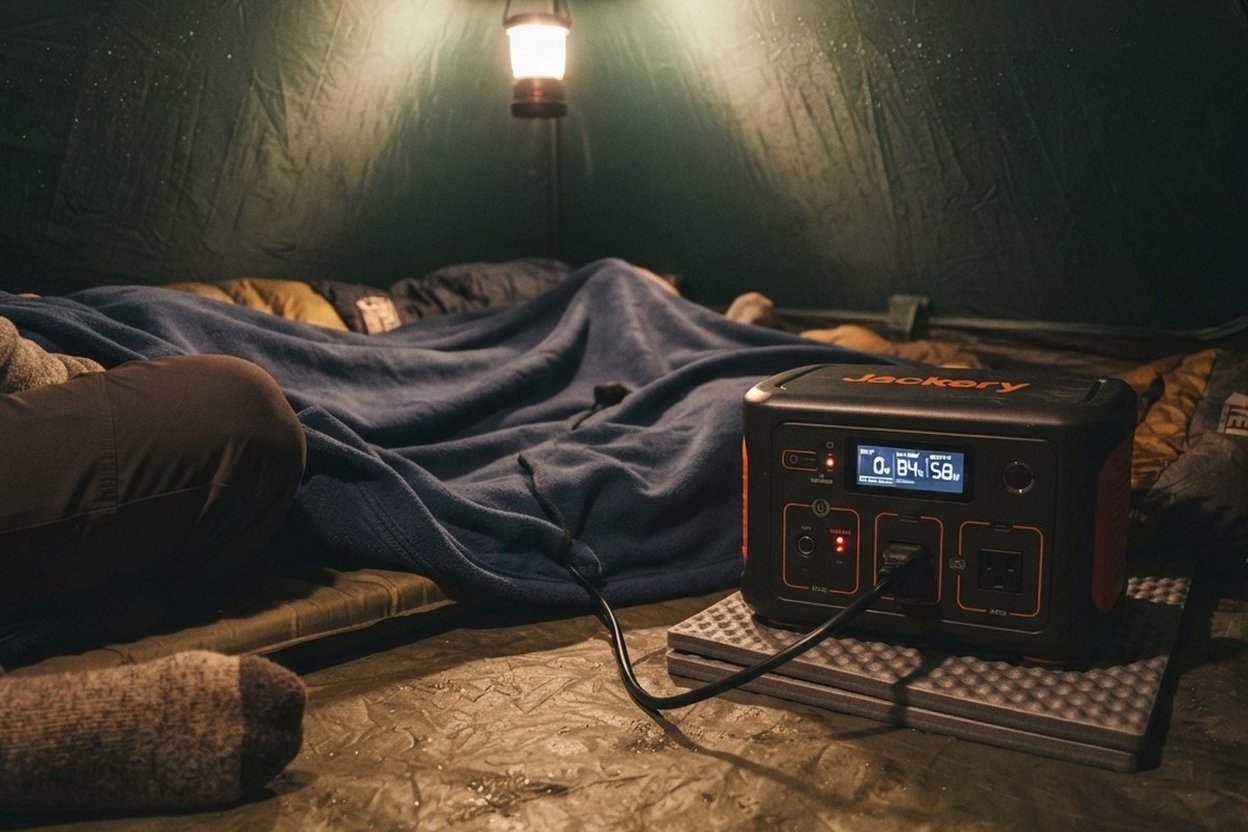
Watt math for running an electric blanket or heated pad on a power station: 120V vs 12V, low vs high, and how many hours you'll get.
A 1,000Wh power station will run a 12V car-style heated blanket (about 45–55 watts) for roughly 17–20 hours. It will run a household queen electric blanket for about 4 hours on high (around 200 watts) and 12–17 hours on low (about 50 watts). For a full night with power left over, use a 12V blanket or keep a 120V blanket on low.
The rest of this post walks through the math so you can work it out for your own station and your own blanket.
Run time (hours) = battery watt-hours × efficiency ÷ watts the blanket draws
Efficiency is the part people skip. A power station turns its battery's DC into 120V AC through an inverter, and that costs you. Runtime calculators commonly use 85% for anything plugged into the AC outlets and about 95% for the 12V car port, because the 12V port skips the inverter.
So a station labeled 1,000Wh really gives you about:
Divide those by the blanket's watts and you have your hours.
Check the tag or the controller first, since that's your blanket's real number. If you don't have it handy, these are typical ranges from power-station makers' guides:
The tag number is the maximum. Most blankets have a controller that cycles the heating wires on and off once the bed is warm, so the average draw over a night is lower than the tag, especially on low or medium.
These use a 1,000Wh station. For a different size, scale the numbers: a 500Wh station gets about half, a 2,000Wh station about double.
Queen 120V blanket on high, 200W, running steady: 850 ÷ 200 = about 4.3 hours. That's not enough for a night.
Queen 120V blanket on low, 50W: 850 ÷ 50 = about 17 hours on paper. Add the inverter's own idle draw (below) and plan on 14 or so.
Mid setting, cycling: say a 150W blanket's controller has the wires on about half the time, for an average of about 75W. That works out to 850 ÷ 75 = about 11 hours. The half-on figure is only an example. Your blanket's duty cycle depends on the setting, the air temperature and how well your bag or quilt holds the heat.
12V blanket at 48W on the car port: 950 ÷ 48 = about 20 hours.
12V blanket at 48W on a small 300Wh station: 285 ÷ 48 = about 6 hours. That's fine if you only run it for the first half of the night.
If you also run a fridge or a CPAP off the same station, add their watts before you divide. Our posts on fridge run times and running a CPAP have those numbers.
A 12V blanket comes out ahead on a power station for three reasons:
The tradeoffs: 12V blankets are mostly throw-size (roughly lap-blanket to single-sleeper), with fewer settings and less heat. A queen 120V blanket covers two people and gets hotter.
Check the 12V port's limit. Many stations rate the car port at 12V/10A, which is 120W. A 4–5 amp blanket is well under that. If you plug in a splitter and run a 12V fridge from the same port, add the amps together.
If the household blanket is what you own, here's how to stretch it:
Most power stations show watts out on the display. Plug the blanket in, set it where you'd sleep, and watch the number for 10–15 minutes. On a cycling blanket you'll see it jump between the full draw and almost nothing.
The better test is a full night at home. Charge the station to 100%, sleep on the blanket, and read the percentage in the morning. If it dropped from 100% to 55% on a 1,000Wh unit, your night used about 450Wh at the wall-side meter. That real number beats any chart, including this one.
A 450Wh night needs 450Wh back in the morning. On short fall days, a 200W panel won't come close to its rating. Our post on solar output on a short fall day shows how to plan for that. If you're on a hookup site, plug the station into the pedestal and you're done.
For the rest of the cold-night setup, see staying warm below 40 and our power station basics.
Wet wood? Find the dry inside, make feather sticks and kindling, and build the fire off the ground. Includes how to put it out fully.
How many firewood bundles a three-night camping trip needs, how to adjust for cold or wet nights and cooking, and why to buy wood near camp.
Get a wet tent and damp sleeping bag as dry as you can at camp, pack them safely, and finish drying at home before mildew sets in.